Write like a pro. Always.
Do you double space between sentences? Or do you do a single space? Odds are, whichever you do, you feel surprisingly strongly about it. Odds are also that if you were taught to type on a traditional typewriter you had the ‘two spaces’ rule drummed into you. But what’s it all really about?
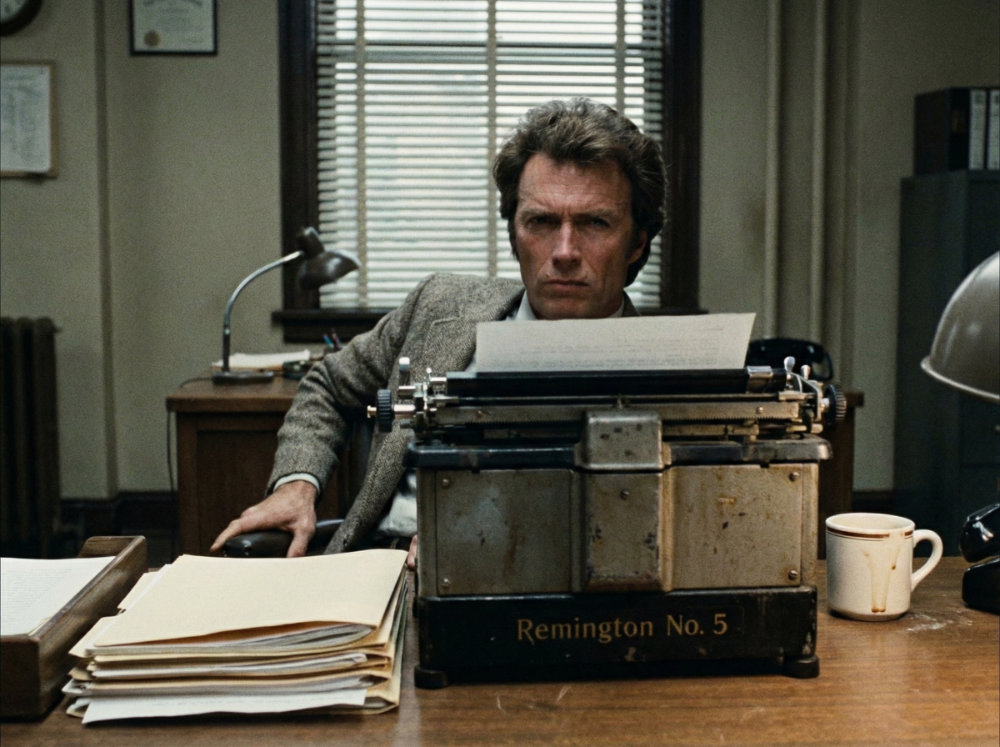
Mechanical typewriters set monospaced letterforms, where the letter m is condensed, the letter i has wide feet and so on. This is because the typewriter carriage is moved a fixed amount with each key press, so each letter sits in the same width on the page. If the letter designs weren’t optically adjusted to take account of that, words would look very weirdly spaced and broken up. The problem here is this messes with legibility, so double spaces after the period/full stop can help clarify sentence delineation. A little bit. Although less than most people think. And ONLY for monospaced typewriter-style text.
Before the advent of word processing and digital file delivery, everything an author wrote would have been typed onto sheets of paper. Then, after it had gone through the editorial proofing and corrections stages, it would have been typeSET from scratch, incorporating the markup edits. Literally every word would have been typed again into a compositing system, at which point any extra spaces would have been ignored.
Okay, historically this isn’t 100% true; if you look at books from the 19th century and earlier you’ll see that some of those have double spaced sentences. However, that’s not evidence or reason for why it should be done like that now. After all, the contraction “wouldn’t” is totally accepted now in almost all contexts, but it only really gained widespread acceptance in written texts in the 20th century. Don’t base current practise on outdated norms.
In the digital era editors receive text that will be, after proofing and corrections are done directly in a text document of some flavour, poured directly into final page layouts or publishing CMS tools, not retyped. Everything today that is professionally edited, typeset and published will use single spaces between sentences; everything you read that has been professionally laid out and typeset will use single spaces. Editors expect copy to be supplied like that. That’s the norm. And that’s why single spacing sentences is the professional thing to do.
Sure, it’s not hard for an editor to use a quick find/replace process to fix this, so why not just leave all those extra spaces to be dealt with later? Well, I have been a commissioning editor in the past, and I have written multiple books and countless magazine articles. At a very conservative estimate I’ve written way more than a million words in a professional publishing context. I have also having taught publishing, production and journalism for many years. As a result I can say with full confidence that that’s really not a good idea. While it’s easy to replace double spaces with singles, expecting the editor to do that for you is just one short step away from expecting them to fix your spelling mistakes too. The more effort someone has to do to make your text ready for publishing, the less likely it is that they will contact you again with more work. Hence, one approach is basically amateur while the other is professional.
I know what you’re thinking. ‘Should I type two spaces or only one?’ Well, to tell you the truth you’ve got to ask yourself one question: ‘Do I feel professional?’
Well do ya, punk?